EPON OLT solutions for professional network building
In this category, you will find modern EPON OLT devices, which are central components of optical access networks (FTTH, FTTB, FTTP). With their help, you can build high-bandwidth, stable, and scalable internet services or corporate networks for hundreds or even thousands of subscribers.
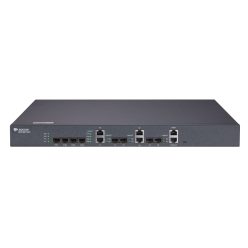
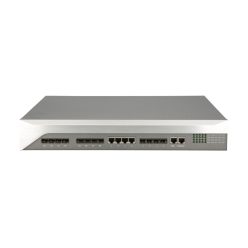
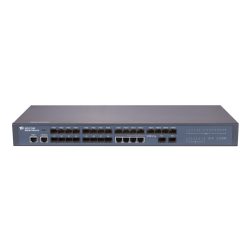
Our selection includes devices with various port counts, different uplink configurations, and management features, such as BDCOM models with 4 or 16 PON ports, as well as high-density, rack-mounted Extralink solutions.
- 4 PON port compact EPON OLTs for smaller networks and pilot projects
- 16 PON port expandable devices for service providers and large enterprises
- 1U, 19” rack-mounted OLTs for data centers and server rooms
- Gigabit and 10G SFP/SFP+ uplink ports for backbone network connections
The role of EPON OLT devices in modern optical networks
EPON OLT devices are central elements of the optical distribution network, connecting the active backbone network with the ONT/ONU units located on the subscriber side. They provide an ideal solution for internet service providers, cable television companies, telecommunications firms, as well as larger office buildings, industrial parks, and campus networks, where many endpoints need to be served uniformly with high availability.
Applications include FTTH/FTTB internet access, VoIP and IPTV services, providing corporate data connections, and building redundant optical infrastructure connecting multiple sites. Different models – such as the BDCOM P3310D or the 16 PON port BDCOM P3616-2TE, as well as the Extralink Predator V2 – fit networks of various sizes and requirements.
Technical considerations when choosing an EPON OLT
When purchasing, it is worth considering the current and planned network capacity, the required number of PON ports, the desired bandwidth, and the available backbone network connection points. Choosing the right device can reduce expansion and operational costs in the long run.
- Number of PON ports: determines how many subscribers or ONTs an OLT can serve. 4-port devices are optimized for smaller networks, while 8–16 port devices are tailored for larger service provider environments.
- Uplink interfaces: gigabit and 10G SFP/SFP+ ports provide connectivity to the backbone network; capacity that aligns with current and future bandwidth needs is important.
- Management and VLAN support: central management, QoS, multicast, and advanced security features are crucial in a service provider environment.
- Physical design: 1U, 19” rack housing facilitates integration into existing server cabinets and data center environments.
Redundancy and reliability are also essential considerations: multiple uplink ports, a separate management interface, and potential backup power options all contribute to continuous service security. A well-chosen EPON OLT lays the foundation for building an easily expandable, scalable optical network in the future.
With a well-planned configuration – appropriate optical splitting ratio, distribution of ONTs, VLAN and QoS rules – the performance of the devices can be maximized while providing a stable, low-latency connection for end users.