Fiber Optic Patch Cables for Data Centers and Networks
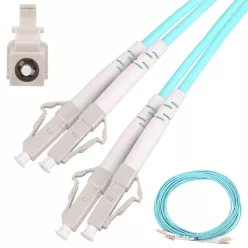
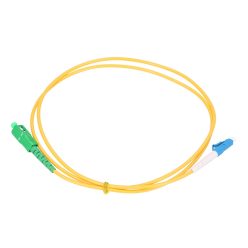
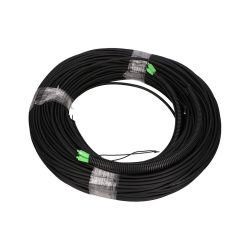
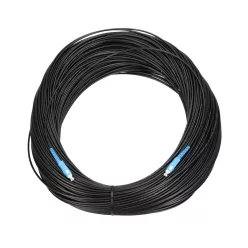
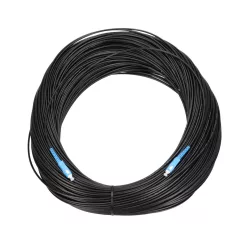
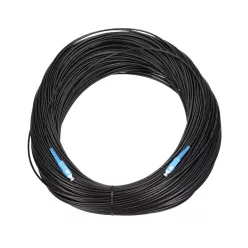
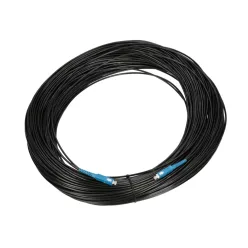
This category features various single-mode and multi-mode Extralink optical patch cables with LC, SC, APC, and UPC connectors, available in simplex and duplex designs. Ideal solutions for quick and organized connections between rack cabinets, active devices, ODFs, and optical splitters.
The selection includes indoor and outdoor cables of varying lengths, compliant with G652D, G657A/A1/A2, and OM2/OM3 standards, making it easy to choose the connector and fiber configuration that precisely fits your system.
- Single-mode patch cables: designed for long-distance, high-bandwidth backbone and FTTH applications
- Multi-mode OM2/OM3 cables: suitable for short to medium distances, data centers, and server farms
- Simplex and duplex designs: for single or dual fiber connections, redundant links
- LC, SC, APC/UPC connectors: compatible with various active devices and patch panels
- Outdoor and indoor types: from indoor connections to outdoor optical sections
What Applications Are Optical Patch Cables Recommended For?
The primary role of fiber optic patch cables is to provide reliable, low-loss connections between established optical infrastructures – splitters, pigtails, patch panels, and active network devices. Their use is essential in data centers, server rooms, FTTH/FTTB systems, as well as enterprise and service provider backbone networks.
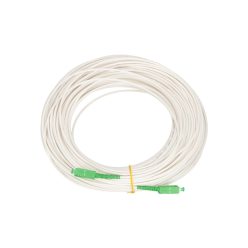
Short cables (0.5–3 m) are primarily used for connections within rack cabinets, linking switches to patch panels or OLTs to optical splitters. Longer sections (5–125 m) are suitable for implementing optical links between cabinets, rooms, or buildings, including outdoor sections exposed to UV and mechanical stress.
Single-mode or Multi-mode? – Selection Criteria
Single-mode (e.g., G652D, G657A/A1/A2) cables are typically designed for longer-distance, high-bandwidth transmission, such as backbone networks, FTTH, FTTB, and PON systems. Multi-mode (OM2, OM3, 50/125 µm) types are ideal for shorter, typically indoor sections, suitable for data center topologies and SAN and LAN connections where high speed is important, but the distance is moderate.
- Single-mode G652D: standard SM solution for general backbone network use
- G657A/A1/A2: more flexible fiber optimized for small bending radius, advantageous in tight spaces and racks
- OM2: for gigabit and lower-speed multi-mode links, suitable for medium distances
- OM3: for 10G/40G/100G data center applications, providing high bandwidth over short sections
Connector Types: LC, SC, UPC, APC
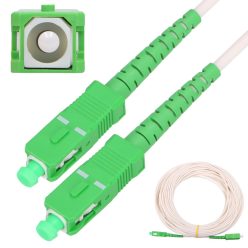
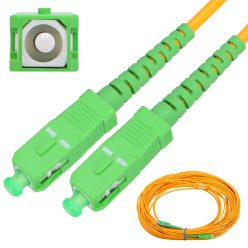
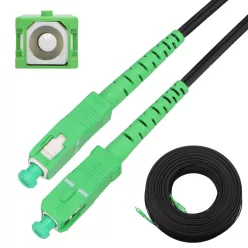
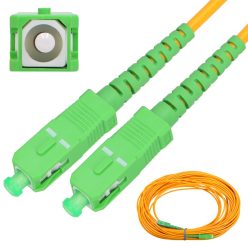
Selecting the right connector is crucial for compatibility. LC/UPC–LC/UPC patch cables feature small connectors, making them particularly suitable for high-port-density panels and modern network devices. SC/UPC and SC/APC connectors are commonly used in optical splitters, outdoor boxes, and FTTH endpoints. The UPC (Ultra Physical Contact) termination provides low reflection for general data transmission purposes, while the APC (Angled Physical Contact) angled polish offers even better reflection parameters, which is especially important for PON and RF overlay systems.
- LC/UPC – LC/UPC: for densely ported devices in data center environments
- LC/UPC – SC/UPC: for quick connections between devices with different connectors
- LC/APC – LC/APC, LC/UPC – SC/APC: for FTTH, GPON/EPON, and other reflection-sensitive networks
- Simplex / duplex design: for one-way connections or complete, two-way optical links
Indoor, Outdoor, and Special Designs
PVC-jacketed indoor cables are ideal for rack cabinets, cable ducts, and between patch panels. Outdoor versions feature a stronger outer jacket, sometimes UV-resistant materials, and greater mechanical protection, making them suitable for outdoor sections between buildings or other environments. The duplex design provides two fibers within a common jacket, allowing for easier installation and organized cabling, while simplex types can be used for individual, targeted optical lines.
By selecting the appropriate length, connector type, fiber configuration, and design, you can choose a fiber optic patch cable that precisely meets the needs of your specific network environment, minimizing loss and increasing system reliability.