iRobot vacuum cleaner batteries – reliable power for your robot vacuum
In this category, you will find high-performance, aftermarket VHBW batteries for iRobot robot vacuums. The selection includes both NiMH and Li-Ion technology types, with various capacities and voltages, making it easy to find a compatible solution that offers long operating time.
The products are ideal for replacing aging, weakening factory batteries, enhancing performance, or serving as backup batteries. For precise compatibility, we list the supported part numbers (e.g., 2130LI, 1800LI, 11702, 4409709, 4446040, ABL-D1, ABL-C, etc.) along with the capacity and voltage on each product page.
- NiMH batteries with 7.2 V, 12 V, and 14.4 V voltages, with various mAh values
- Li-Ion batteries with high energy density, up to 6800 mAh
- Replacement batteries for classic and newer iRobot models (e.g., APS 4905, 11700, 17373, 4374392, 4462425, 4650994, ABL-B, ABL-C, ABL-D1/D2)
- Solutions for longer operating time, faster charging, and stable suction performance

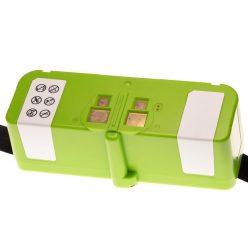
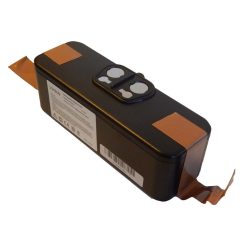
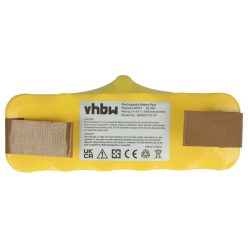
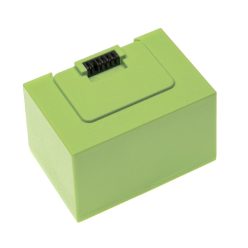
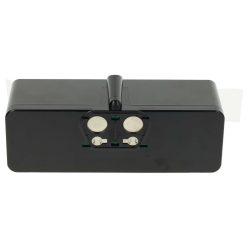

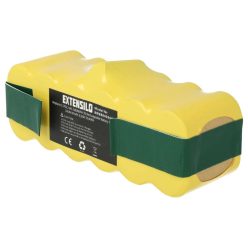
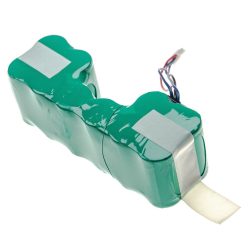


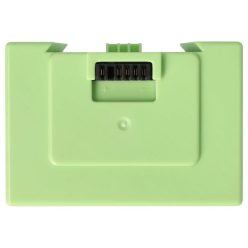
Applications: when should you replace the battery?
The battery of the robot vacuum loses capacity over time: operating time decreases, charging becomes more frequent, and the device may no longer complete the cleaning cycle. In such cases, it is advisable to choose a new battery that restores the original or even longer operating time. The VHBW batteries in our range can be used as full replacements for iRobot models, compatible with the original part numbers (e.g., 11702, 2130LI, 4409709, 4446040, 4650994, ABL-C, ABL-D1, ABL-D2).
Technical aspects: capacity, voltage, technology
When purchasing, the most important technical parameters are capacity (mAh), voltage (V), and battery technology type (NiMH or Li-Ion). The voltage must always match that of the original battery (e.g., 7.2 V, 10.8 V, 12 V, 14.4 V), and the capacity can be the same or higher if you want longer operating time.
- Capacity (mAh): the larger it is, the longer the robot vacuum can operate on a single charge (e.g., 1500–4500 mAh NiMH, 2600–6800 mAh Li-Ion).
- Voltage (V): must always match the factory specification, e.g., 14.4 V for the Roomba series, 7.2 V for smaller iRobot units, 3.6 V for special modules.
- Technology: NiMH solutions (e.g., for APS 4905, NC-3493-919, 11700, 17373 types), as well as modern Li-Ion batteries (e.g., for 2130LI, 1800LI, 4376392, 4462425, ABL-D1, 4650994 marked types).
NiMH vs. Li-Ion batteries for robot vacuums
NiMH batteries are robust, widely used in older iRobot models, and offer a favorable price-performance ratio (e.g., in the 1500–4500 mAh range). In contrast, Li-Ion technology is lighter, provides higher energy density, and generally offers longer operating time as well as better self-discharge characteristics (e.g., types with capacities of 2600, 3500, 5200, 6000, or 6800 mAh).
Newer robot vacuums – which have LI or ABL markings in their part numbers (e.g., 2130LI, 1800LI, 379640, ABL-B, ABL-C, ABL-D1/D2, BC674) – typically operate with Li-Ion batteries. For these, it is important to select a compatible replacement specifically designed for the given series.
Compatibility: checking part numbers and series
On each battery product page, we provide detailed information on which part numbers and series it fits. Examples include the 11702, 80501e, 80601, 68939, 855714, 4419696 series, the APS 4905 and 11700 / 17373 types, the iRobot 4374392, 4376392, 4462425, 4502233, as well as the 4409709, W206001001399 or 4446040, BC674 marked units. Before purchasing, it is advisable to compare this data with the number found on your device or the old battery.
Practical tips for longer lifespan
The lifespan of the battery is greatly influenced by proper use and storage. Avoid leaving it in a fully discharged state for extended periods, do not expose it to extreme temperatures, and allow the robot vacuum to regularly complete its cleaning cycles. Proper maintenance – cleaning filters and brushes – also relieves the battery, allowing your robot vacuum to maintain its performance for as long as possible.