Hilti Carbon Brushes for Power Tools
In this category, you will find high-quality, aftermarket carbon brushes for various Hilti machines, whether it's a rotary hammer, screwdriver, angle grinder, or saw. The right carbon brush is essential for the reliable operation of the motor and for preserving the tool's lifespan.
Choose from different sizes and types, such as those for TE series rotary hammers (TE1, TE7, TE14, TE30, TE804, TE904, TE905 AVR), DC and DCG angle grinders, SF screwdrivers, or carbon brushes for WSR, WSJ, SFC machines.
- Carbon brushes for Hilti rotary hammers (e.g., TE1, TE7, TE14, TE30, TE804, TE904, TE905 AVR)
- Carbon brushes for Hilti angle grinders and cutting machines (e.g., DC125, DC SE 19, DCG 125-S, AG 125-S)
- Carbon brushes for screwdrivers and drills (e.g., SF 144-A, SFC-14, SD 5000)
- Carbon brushes for reciprocating saws and jigsaws (e.g., WSR 900-PE, WSJ 750 EB)
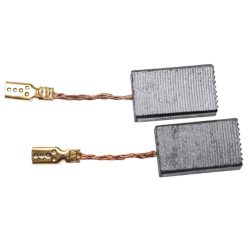
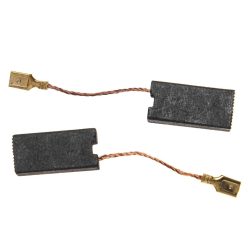
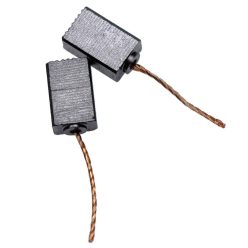
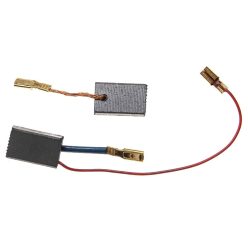
- Various sizes (e.g., 21 x 12.5 x 6 mm, 26 x 12.5 x 7 mm, 5 x 10 x 18 mm) VHBW aftermarket carbon brushes sold in pairs





Applications of Hilti Carbon Brushes
The carbon brush is a key wear part of commutated electric motors, ensuring the transfer of current to the rotor. In Hilti machines – whether it's a rotary hammer (TE series), screwdriver (SF, SFC, SD), angle grinder (DC, DCG, AG), or saw (WSR, WSJ) – worn carbon brushes can cause performance reduction, sparking, or shutdown. In such cases, replacement is essential for the tool to continue operating safely and efficiently.
In our online store, we offer VHBW aftermarket carbon brushes in pairs, specifically for Hilti types: from the classic TE7, TE14, TE30, TE804, TE904, TE905 AVR rotary hammers to the DC125, DC SE 19, DCG 125-S, and AG 125-S angle grinders, as well as the SF 144-A, SFC-14 screwdrivers and WSR 900-PE, WSJ 750 EB saws. With precise fit and the right carbon composition, near-factory operation and lifespan of the motor can be achieved.
What Technical Aspects Should You Consider When Choosing a Carbon Brush?
When selecting a carbon brush, the type of machine and the size of the carbon brush are always decisive. The wrong size or design can cause excessive sparking, rapid wear, or even motor failure, so it is important to check the technical parameters.
- Sizes: exact width, height, thickness (e.g., 21 x 12.5 x 6 mm; 26 x 12.5 x 7 mm; 5 x 10 x 18 mm). It is advisable to check these on the old carbon brush or the product data sheet.
- Machine Type: the compatible Hilti model is indicated in the product names (e.g., TE1, TE7, TE30, TE804, TE904, TE905 AVR, DC125, DCG 125-S, SF 144-A, SFC-14, SD 5000).
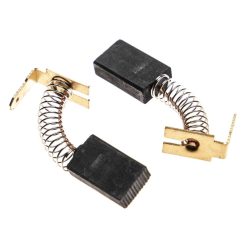
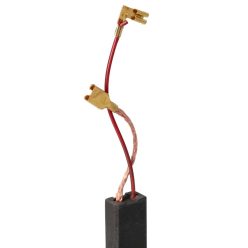
- Design: connection, connector tab, cable length, spring, and guide groove shape – these must match the original.
- Material Quality: VHBW carbon brushes are made from materials with balanced hardness to ensure low wear and good contact with the commutator.
Tips for Choosing and Replacing the Right Carbon Brush
Before purchasing, it is advisable to read the exact model number of the Hilti machine (e.g., from the TE804 or DC SE 19 nameplate) and compare it with the compatible models listed in the product description. If possible, compare the old carbon brush with the specified sizes (e.g., 16.5 x 10 x 5 mm, 18 x 10 x 5 mm, 24 x 12.5 x 6.2 mm). If you have several very similar types to choose from, always calculate with the product that precisely indicates your machine.
During replacement, ensure a clean, dust-free environment, and check the condition of the carbon brush holder and the commutator. In the case of a heavily grooved, burnt commutator, the lifespan of the carbon brushes may be significantly shortened, and it is advisable to consult a professional service. Newly installed carbon brushes will "break in" during the first operating hours, so periodic checks are recommended during this time.
Why Choose Aftermarket Carbon Brushes?
VHBW carbon brushes offer a favorable price-performance ratio while covering a wide range of the most commonly used Hilti machines. A professional carbon brush replacement is much more economical than a complete machine replacement and often restores original performance. This way, you can sustainably use your existing Hilti machines even under intensive, industrial use.