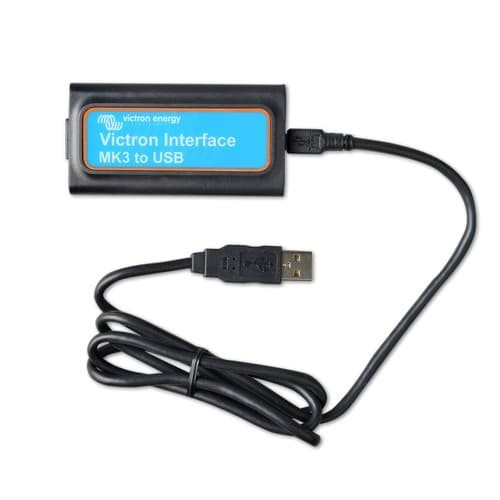
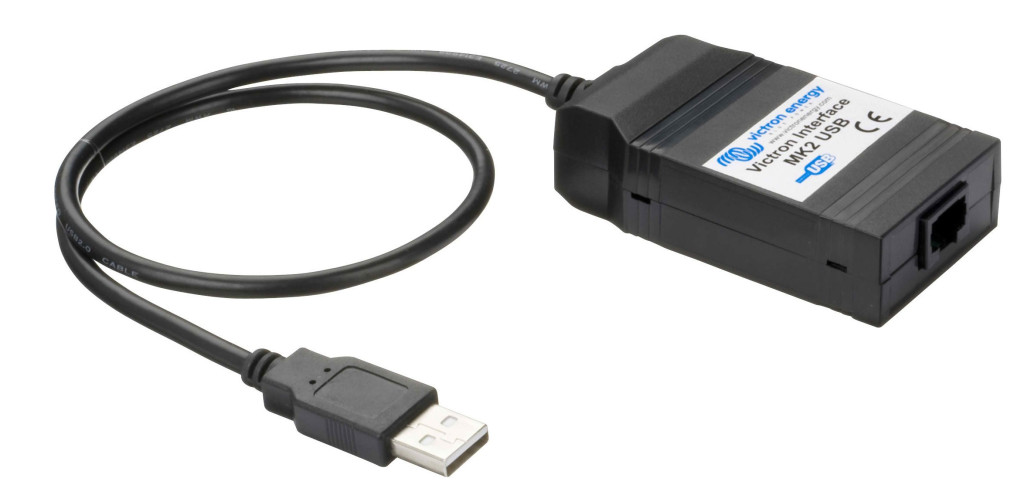
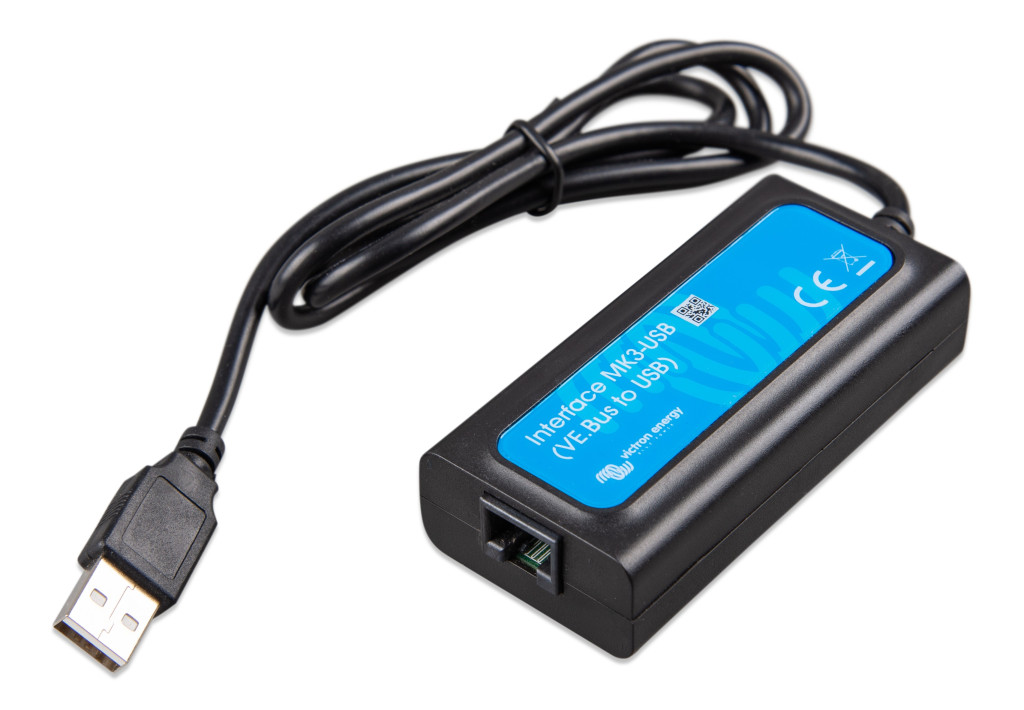
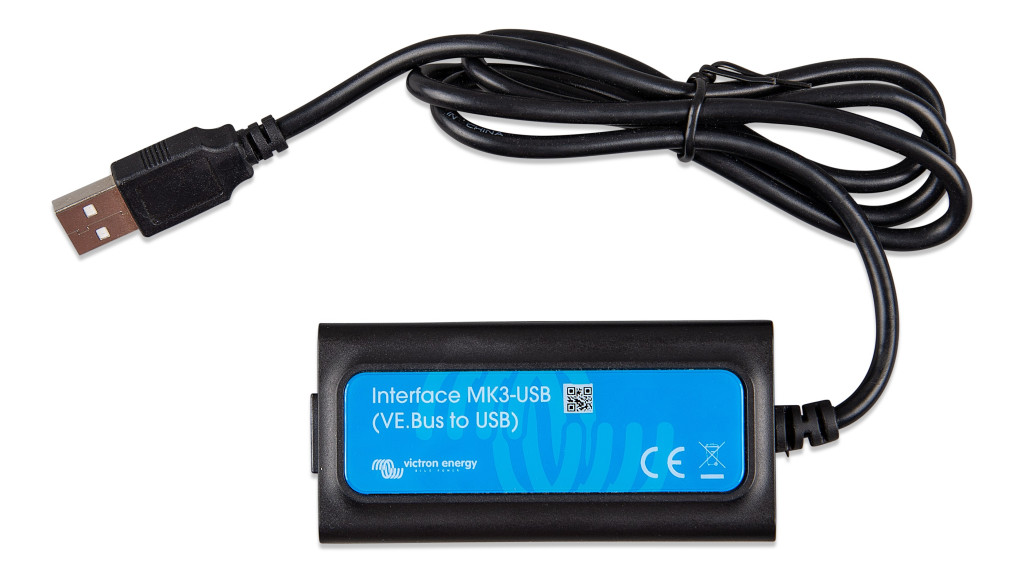
Professional USB interface for Phoenix battery chargers
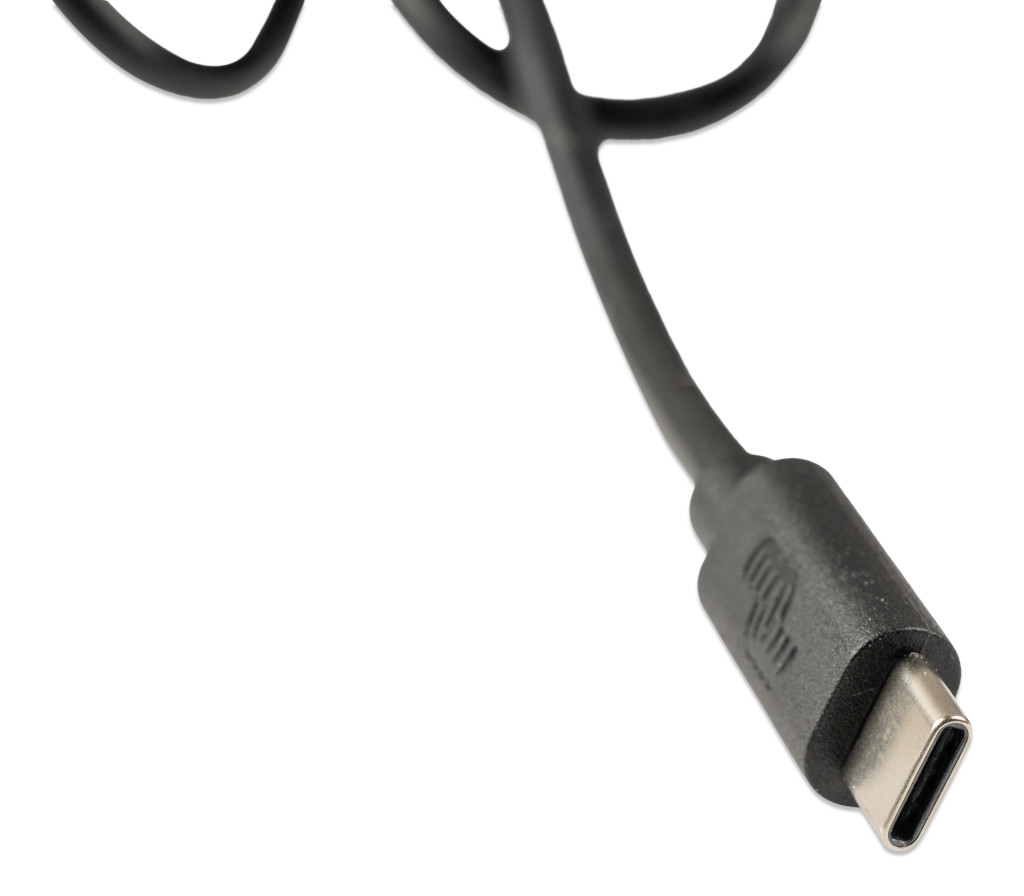
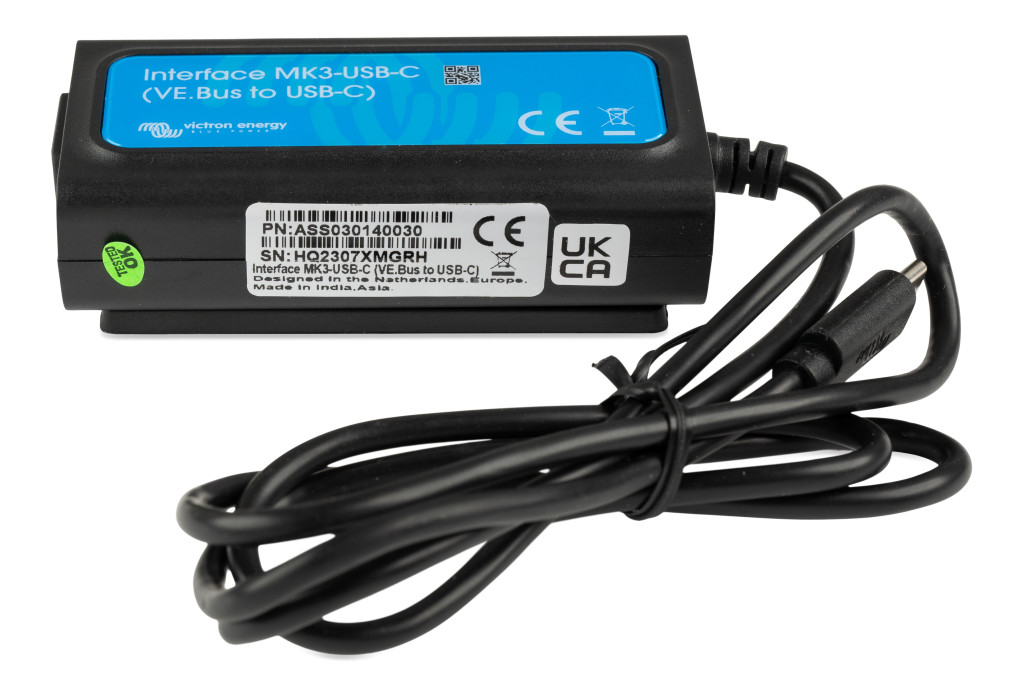
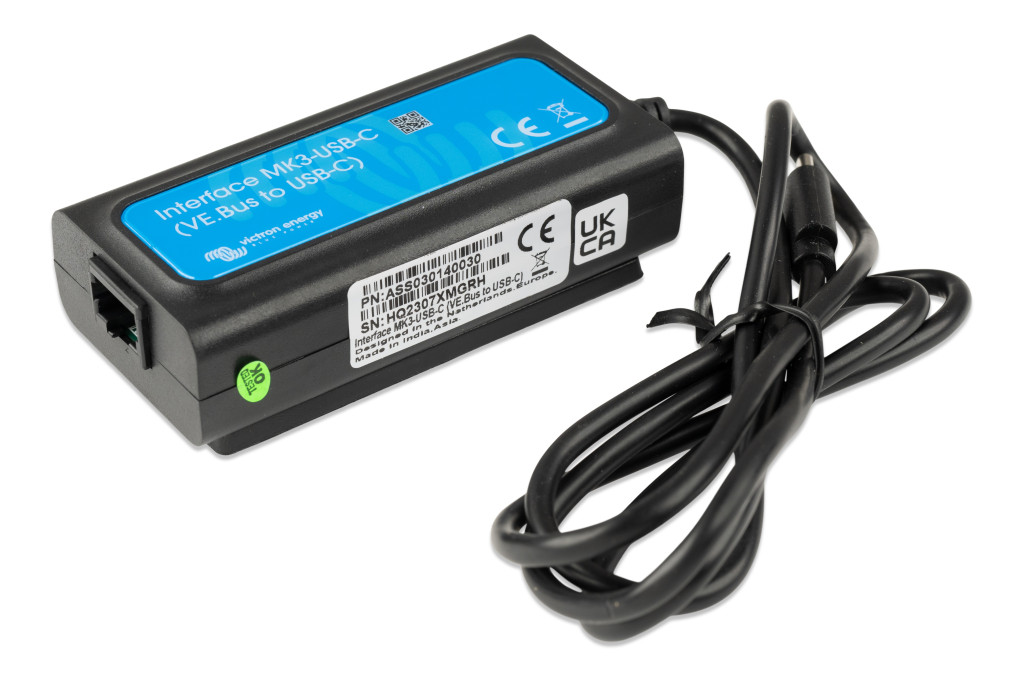
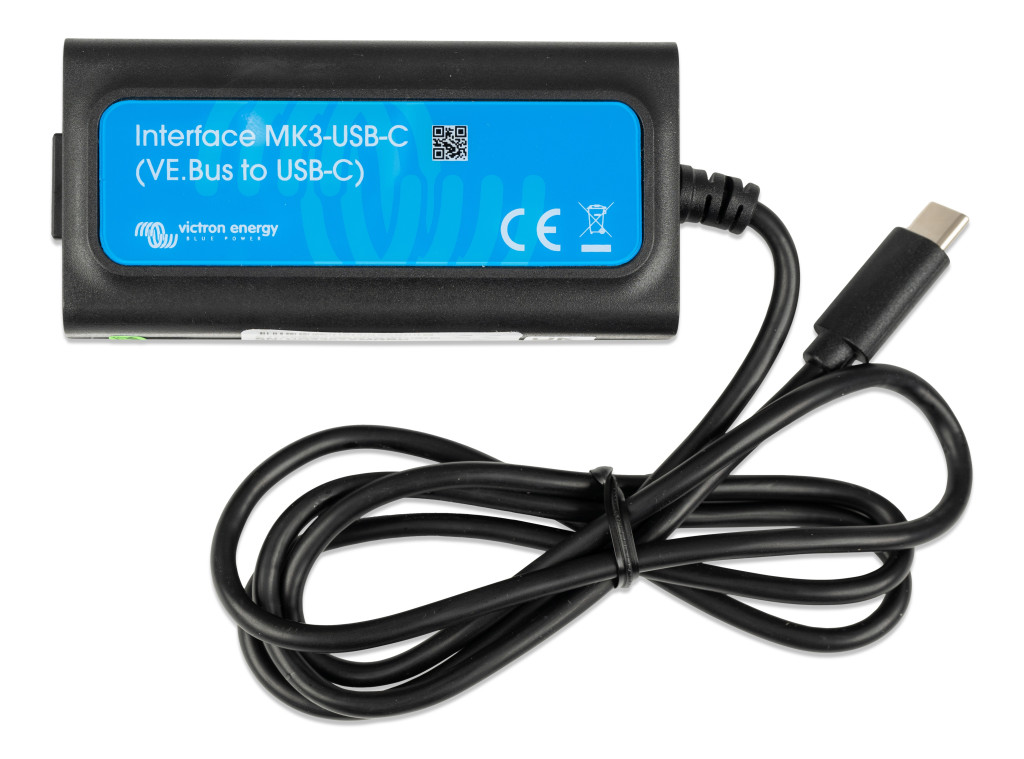
This modern USB interface creates a reliable connection between Victron Phoenix battery chargers and the computer. It allows detailed monitoring of the charger operation, modification of parameters, and downloading of logged data. An ideal choice for any system where precise charge control, remote monitoring, and customizable battery management are important.
Main features and benefits
- USB–VE.Bus communication conversion for Phoenix battery chargers
- Easy connection to PC or laptop via USB port
- Support for configuration, diagnostics, and firmware updates
- Real-time monitoring and logging of charging data
- Stable and galvanically isolated communication with the inverter/charger system
What is the USB interface used for?
The adapter allows you to configure and monitor the Phoenix charger(s) directly from a computer using Victron configuration software or other compatible monitoring programs. This is particularly useful for solar systems, marine and RV power supply systems, as well as industrial battery applications.
- Performing basic settings (charging voltage, current, charging profile)
- Fine-tuning advanced parameters for different battery types
- Reading error codes and status messages
- Executing firmware updates on compatible devices
- Data logging and analysis of operational statistics
Ideal solution for monitoring battery charging
With the interface, the charging process becomes fully transparent. Thanks to real-time monitoring, signs of overload, undervoltage, or overheating can be easily detected. This can increase the lifespan and reliability of batteries while reducing operational costs and the likelihood of unexpected shutdowns.
Compatibility and system integration
The adapter is specifically designed for Victron Phoenix battery charger systems with VE.Bus based communication connection. It is ideally used in systems where:
- solar charging control and energy storage are implemented
- RV, boat, or off-grid installations require detailed battery monitoring
- industrial or security backup power supply is operational (UPS, emergency lighting, alarm)
Typical application areas
- Photovoltaic (PV) systems with battery energy storage
- Onboard networks of RVs, camper vans, caravans
- 12 V / 24 V systems on sailing and motor boats
- Remote, off-grid power supply stations
- Backup power supply for telecommunications equipment
Easy installation and use
The USB interface operates on a plug and play basis: simply connect it to the VE.Bus port of the Phoenix battery charger, then plug the USB cable into the computer. After installing the appropriate driver and Victron software, detailed settings and monitoring options are immediately available.
- Small size, easy handling
- No separate power supply required, it draws power from the USB port
- Fast data communication and reliable connection
Why is computer configuration advantageous?
Configuring from a PC allows for much more detailed and precise settings than traditional manual control. The graphical interface makes it easy to review voltage and current curves, charging phases, and battery status. Thus, charging can be optimized for different battery types, such as:
- sealed lead-acid (AGM, GEL) batteries
- flooded lead-acid batteries
- lithium (LiFePO4) systems, based on manufacturer recommendations
Long-term investment in system reliability
Accurate battery charging is crucial for the lifespan of any energy storage system. This USB interface allows Phoenix chargers to operate as optimally as possible, protecting batteries from the harmful effects of under- and overcharging. Well-set charging:
- reduces the risk of sulfation
- improves available capacity
- extends the overall lifespan of batteries
Summary
This USB–VE.Bus interface is an essential accessory for any user who wants to maximize the capabilities of Victron Phoenix battery chargers. It enables precise charge monitoring, setting of customized charging profiles, and simplifies troubleshooting and maintenance. With its use, the entire power supply system can be operated more efficiently, safely, and reliably.