Professional fiber optic fault finding with a compact device
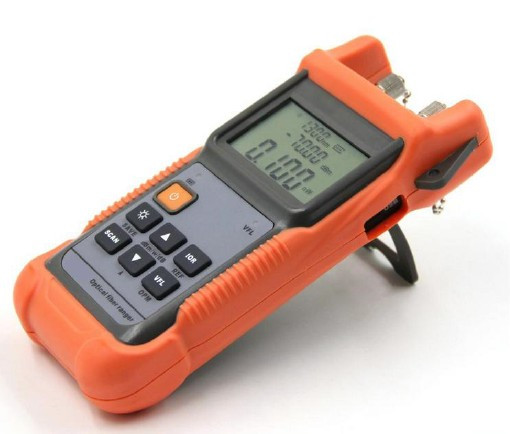
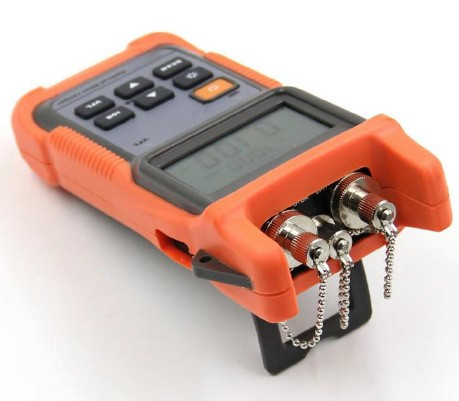
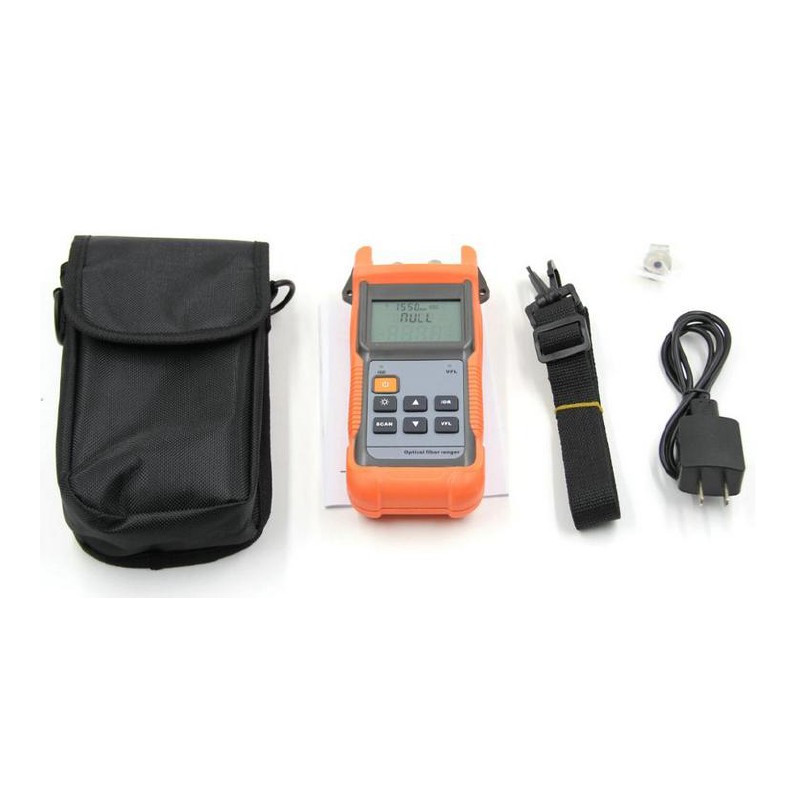
The Extralink SUR190-s OTDR is a portable, high-precision fiber optic fault locator designed for measuring, diagnosing, and documenting optical networks. It is an ideal tool for telecommunications professionals, network builders, and maintenance personnel looking for a reliable solution for inspecting optical cables at 1310 nm and 1550 nm wavelengths.
The device operates as an optical reflectometer: it sends short laser pulses into the fiber optic cable and then analyzes the reflected signals. This provides a detailed picture of the entire optical path, making it easy to identify points of attenuation, splices, connectors, breaks, or excessive bends.
Key features and applications
This fiber optic reflectometer is versatile for use in FTTx networks, backbone network sections, data centers, CCTV systems, and any other optical cable system installation and maintenance.
- Real-time evaluation of optical fault finding
- Dual wavelength measurement at 1310 nm and 1550 nm
- Detailed graphical trace display of the entire optical section
- Quick diagnostics during new network handovers or fault detection
- Measurement over long distances, even with large cable lengths
How the optical reflectometer works in simple terms
The principle of the OTDR (Optical Time Domain Reflectometer) is based on the fact that some of the light in the optical fiber is reflected back to the starting point. The device measures how long it takes for the signal to return and what the attenuation is along the way. Thus:
- It emits a light pulse into the optical cable.
- Continuously detects the signals reflected in the fiber.
- Calculates the distance and attenuation of various events (splice, connector, break).
- Displays the entire path in graphical form.
This allows the technician to see exactly where excessive signal attenuation occurs, where there is a break, and at which points repairs or relocations may be needed.
Benefits for installers and operators of optical networks
Using the device can significantly reduce fault finding time, and the state of the network can be more easily documented. This is particularly useful in the installation of FTTx and PON systems, where there are multiple branches and connectors.
- Accurate fault location determination with meter accuracy
- Reliable optical attenuation measurement to check transmission quality
- Quick verification during the creation or expansion of new sections
- Possibility to create complete, retrievable measurement logs
- Cost reduction, as the location of faults can be approached specifically
Measurement at 1310 nm and 1550 nm wavelengths
The fiber optic reflectometer operates at two standard measurement wavelengths: 1310 nm and 1550 nm. This allows:
- Comparison of the optical fiber's behavior in different spectral ranges
- Measurements aligned with the data transmission wavelengths used in practice
- Detailed examination of attenuation caused by aging, micro-breaks, or bends
- Preparation of both unidirectional and bidirectional measurement logs
Typical faults that can be easily identified
The device can detect and display various types of optical events, allowing for a quick assessment of the network's condition.
- Complete or partial optical break
- Poor quality splices, high attenuation connection points
- Poorly connected or contaminated optical connectors
- Excessively bent optical cables
- Poorly executed splices or branches
User-friendly design for fieldwork
The fiber optic fault locator is portable and ruggedly designed, making it suitable for outdoor work. The interface is clear, and the menu system is logical, allowing the measurement process to be initiated in just a few steps.
- Well-readable display that can be used in strong sunlight
- Easy-to-reach function buttons for quick settings
- Long-lasting battery for fieldwork
- Robust housing that protects the internal optical modules
Key features of a modern OTDR
The device offers many practical functions for everyday optical fault finding and network monitoring:
- Automatic measurement mode that makes it easy for beginners to use
- Manual adjustment options for advanced users (pulse width, measurement range, averaging)
- Event list that indicates connectors, splices, break points in tabular form
- Saving measurement results for later retrieval
- Data transfer capability to a computer, where detailed reports and documents can be prepared
Practical application examples
The device provides assistance in many situations, from simple cable testing to complex network diagnostics.
- Pre-checking of a new optical network before handover: surveying line sections, preparing documentation.
- Troubleshooting in an operational network: locating the break point, finding the damaged section.
- Maintenance of optical backbone networks: periodic checks, monitoring attenuation changes.
- Inspecting optical patch panels in data centers: checking the condition of connectors and patch cables.
- Checking the optical backbone of CCTV and IP surveillance systems: examining the video signal transmission path.
Why is using a fiber optic fault locator beneficial?
Without this type of optical measuring instrument, locating the fault can often be time-consuming and uncertain. If you only use an optical power meter, you cannot see exactly where the attenuation occurs. An OTDR:
- Provides a clear, graphical picture of the entire optical section
- Allows for individual examination of each event
- Helps determine whether the fault is on the provider's or subscriber's side
- Facilitates the resolution of warranty disputes with documented measurements
Summary – a reliable solution for measuring optical networks
The Extralink SUR190-s OTDR is designed for professionals looking for a reliable, accurate, and easy-to-use fiber optic fault locator. With measurements performed at 1310 nm and 1550 nm, detailed optical traces, and storable and analyzable measurement results, the condition of any optical network can be effectively monitored.
Whether for new installations, expansions, or fault repairs, this OTDR is an essential tool for ensuring quality optical connections, minimizing downtime, and maintaining reliable data transmission in the long term.