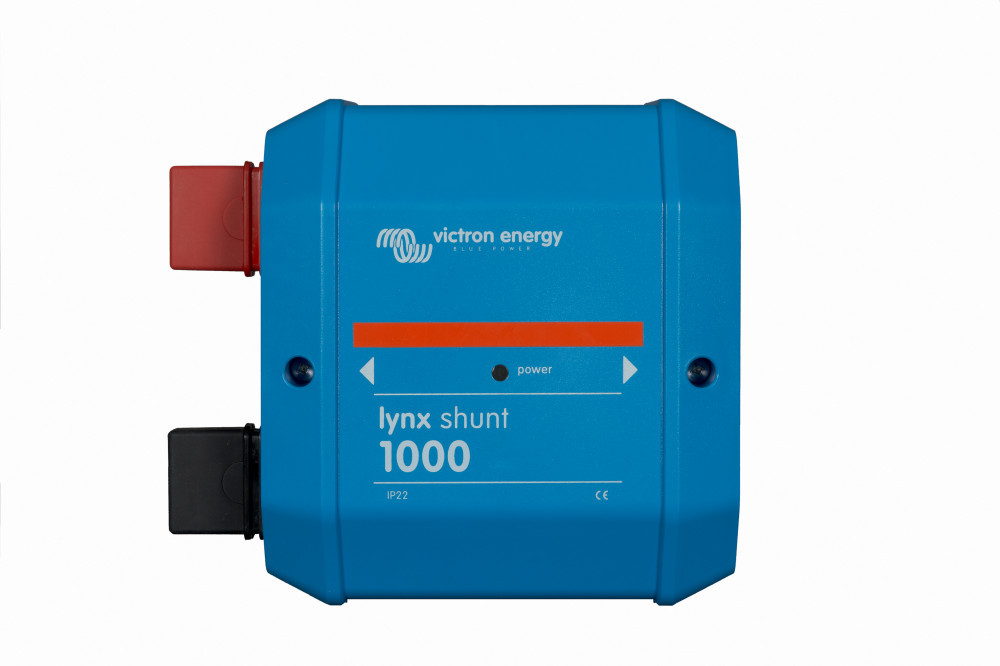
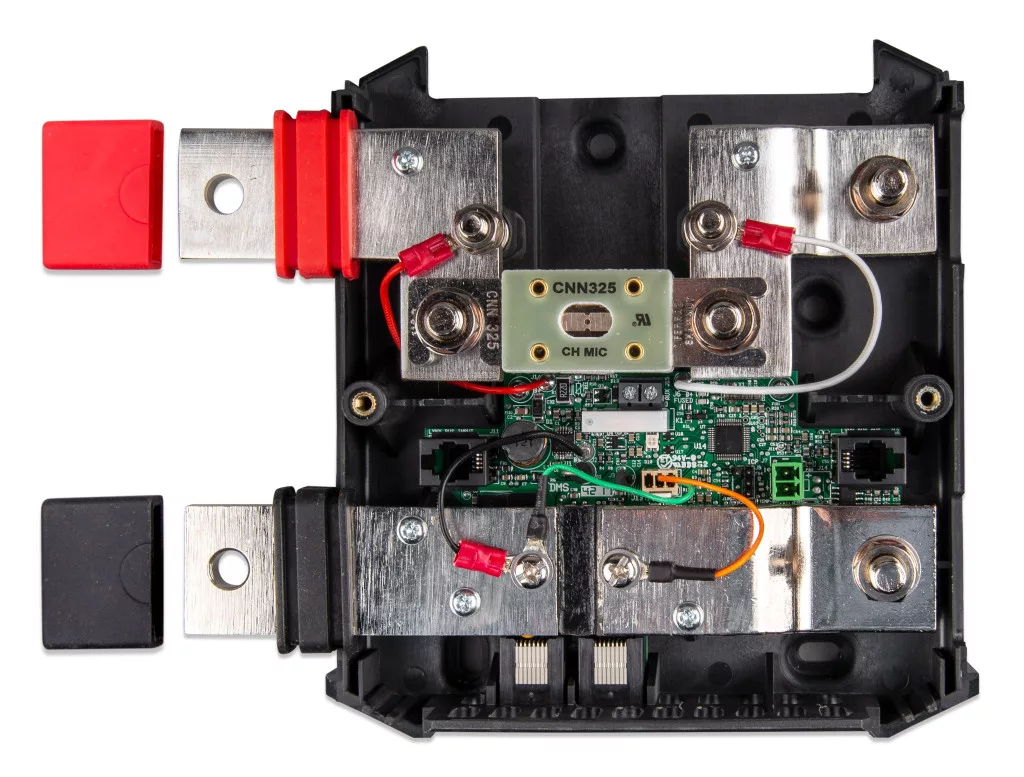
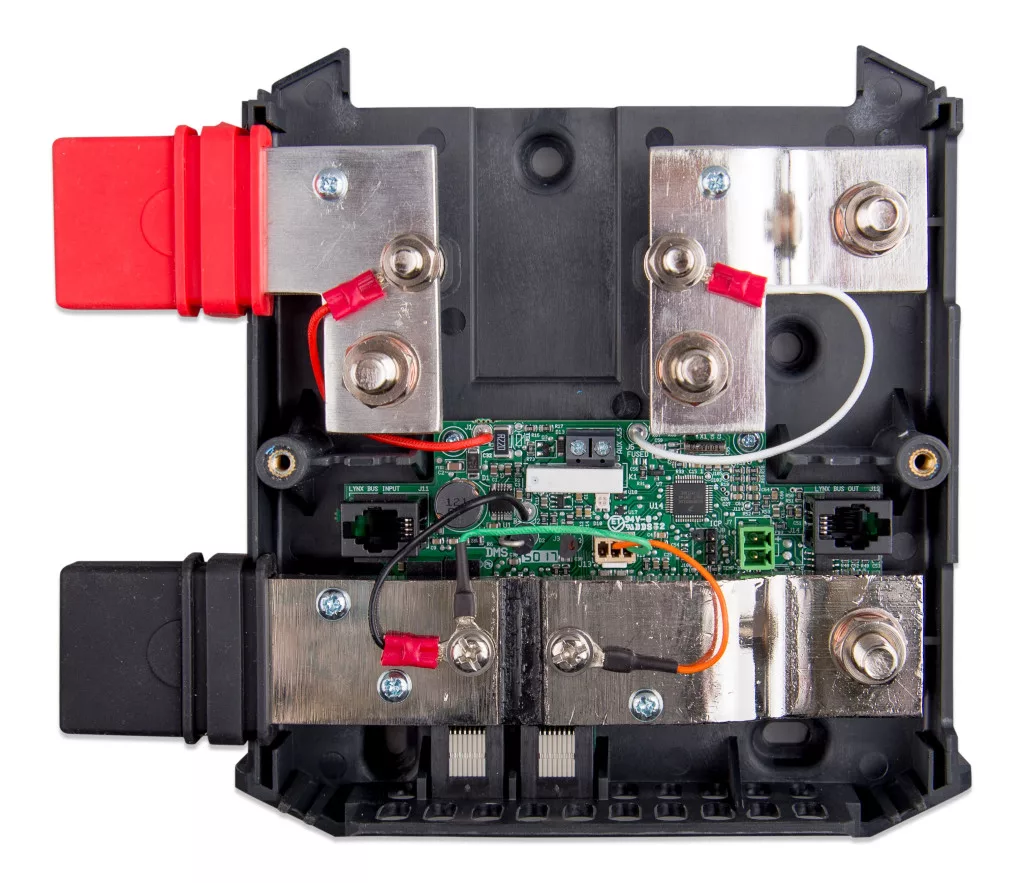
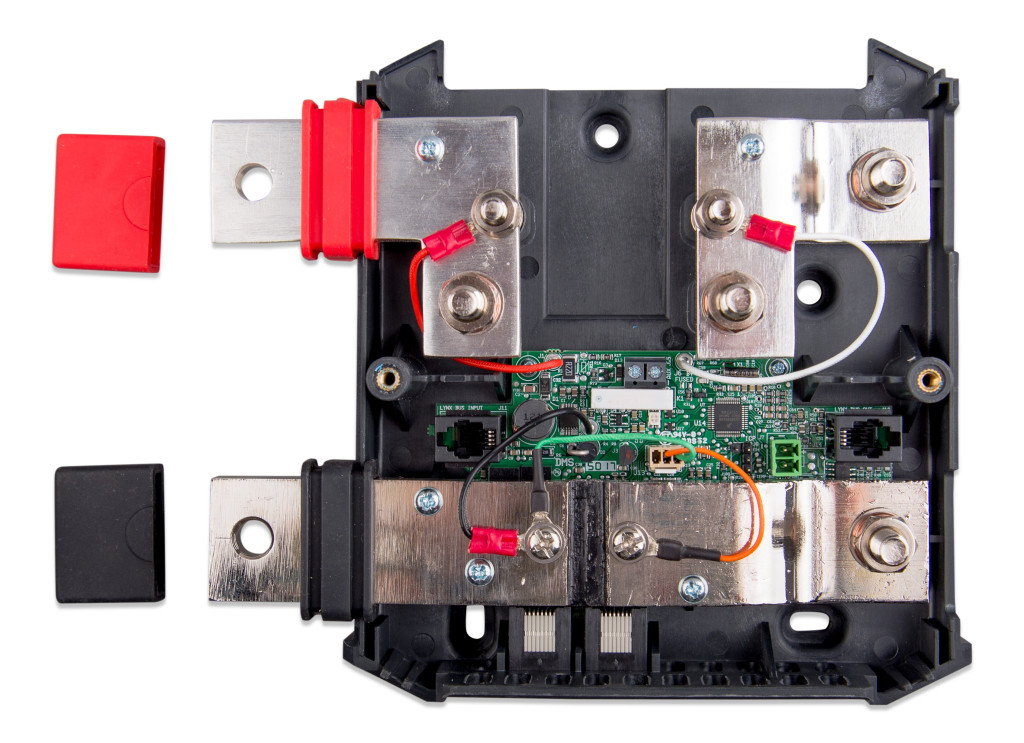
Professional shunt module for advanced battery monitoring
This high-precision shunt module is designed for the Victron Energy Lynx system and plays a key role in measuring current and energy in the entire 12 V, 24 V, or 48 V DC system. Thanks to its integrated electronics and VE.Can communication, it provides reliable data to the battery monitoring system, giving an accurate picture of the battery's state of charge, consumption, and charging.
Main features and benefits
- Accurate current measurement across the entire DC system
- Monitoring of battery state of charge, capacity, and health
- VE.Can communication with Victron controllers and displays
- Easy integration into the Lynx distribution system
- High-quality, low-resistance shunt for low loss
- Reliable operation in solar and marine power systems
How does the shunt module work?
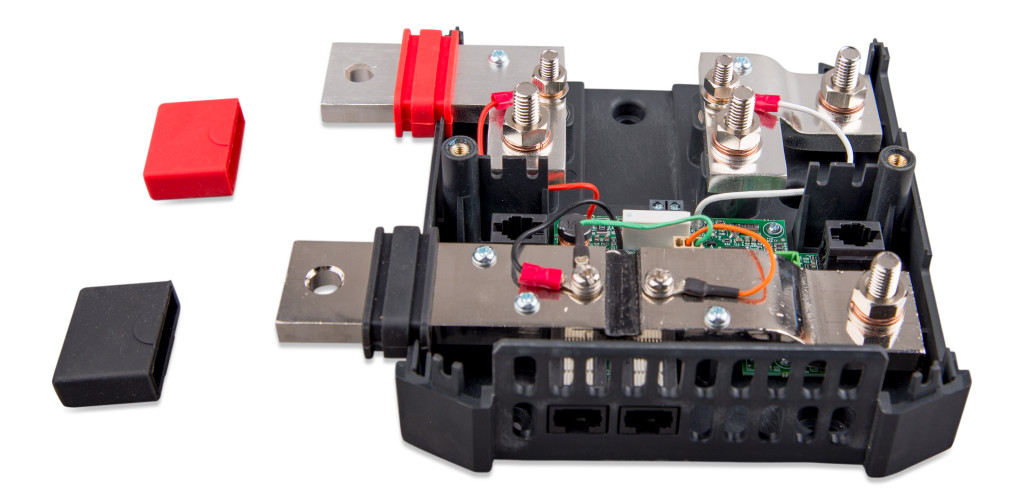
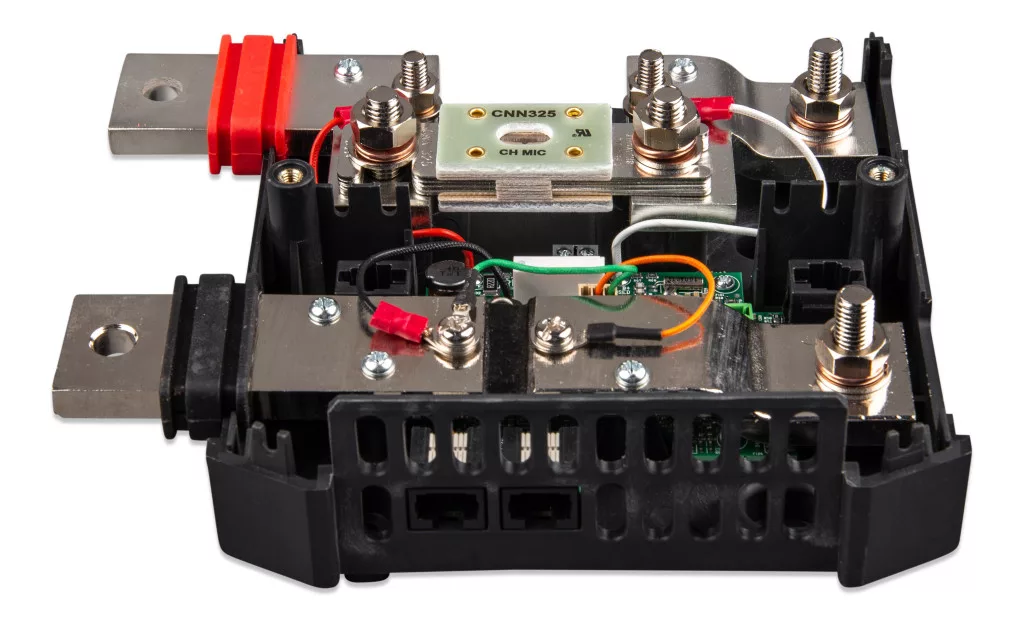
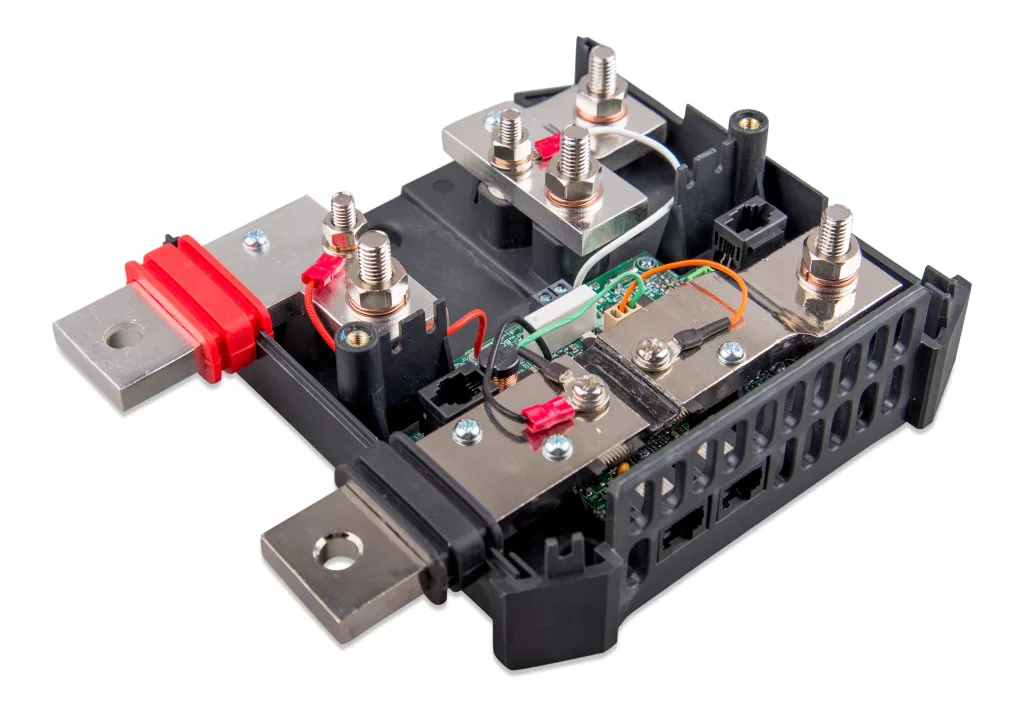
The shunt is a very low-value resistor through which the entire DC circuit flows. By measuring the voltage drop, the current flowing in the system can be calculated. The built-in electronics continuously measures:
- the current flowing into and out of the battery
- the instantaneous voltage
- the amount of energy consumed and returned (Ah, Wh)
From this data, the system generates accurate battery monitoring information, such as remaining capacity, state of charge percentage, and expected runtime under current load.
Ideal application areas
- Independent power supply for RVs and caravans
- Onboard DC systems of sailboats and motorboats
- Solar off-grid systems
- Backup and emergency power systems
- Industrial DC distributors and battery storage
Compatibility and system integration
The shunt module operates as part of the Lynx distribution system and connects via VE.Can communication to Victron controllers and displays, such as:
- GX monitoring devices (e.g., Cerbo GX)
- VRM online portal for remote monitoring
- Displays and monitors (e.g., touch-screen VE.Can compatible panels)
The system transmits the measured data in real-time, allowing for a single user interface to monitor the entire DC power supply: battery, solar charging, inverter/converter, and consumers.
Accurate battery monitoring for longer lifespan
Reliable battery monitoring is not just a convenience feature but one of the keys to extending battery life. With the shunt module:
- the battery's state of charge (SOC) can be tracked
- deep discharging and excessive loading can be avoided
- charging profiles can be optimally set
- overloads and faulty consumers can be detected in time
Advantages over traditional amp-hour counters
- Integrated system monitoring: not just a standalone meter, but a module fitting into the entire Lynx DC distributor.
- VE.Can data communication: reliable, high-speed connection to Victron controllers and monitors.
- Real-time energy data: current, voltage, power, energy consumption, and charging data all in one place.
- Flexible system expansion: easily integrable with additional modules, batteries, and inverters.
Typical setup in a Lynx-based DC system
In a modern solar or marine DC power supply system, the shunt module works together with the following components:
- Battery bank (LiFePO4, AGM, or other lead-acid)
- Lynx distribution modules (distributors, fuse blocks, switches)
- Solar charge controller and/or grid charger
- Inverter/battery charger combination device
- GX monitoring device managing the VE.Can network
The shunt is placed in the entire battery branch, allowing it to measure all incoming and outgoing current, regardless of whether the load comes from the solar system, inverter, or other DC consumers.
Installation and connection – important considerations
For proper and safe operation, the following points should be considered during installation:
- The shunt should always be placed in the negative wire of the battery.
- All loads and chargers in the DC system should connect through the shunt.
- Ensure appropriate cross-section cabling and reliable connections.
- The VE.Can communication cable should be connected according to Victron system guidelines.
- During the first commissioning of the system, it is necessary to set the battery capacity and basic data on the controller.
Why is VE.Can-based energy monitoring advantageous?
The VE.Can communication system is specifically designed for multi-device power supply systems. Its advantages include:
- stable, industrial CAN-bus based data transmission
- communication of multiple devices over a single cable
- easy network expansion by adding additional modules
- complex energy management functions combined with GX devices
As a result, the data measured by the shunt is not only displayed but can also be actively used to optimize the system, such as for automatic generator start, load management, or energy sharing.
Reliability and quality designed for the long term
Victron products are designed for industrial and mobile applications where reliability is a primary concern. The shunt module:
- is robustly designed, vibration-resistant, making it safe for use in vehicles and boats
- has minimal self-consumption
- provides stable measurements over the long term
- is supported by Victron documentation and software updates
Who is it recommended for?
This shunt module is an ideal choice for anyone who:
- is building a more serious solar or onboard power supply system
- wants accurate battery monitoring
- is using or planning to use Victron Lynx DC distribution and VE.Can communication
- considers optimizing energy consumption and reliable runtime important
Summary
The shunt module in question is a key element of any modern Victron-based DC power supply system. It provides detailed and accurate information about the operation of the entire battery system, optimizes energy consumption, extends the life of your batteries, and enables reliable, transparent energy management in an RV, boat, or solar off-grid system. The VE.Can communication, Lynx compatibility, and high-precision current measurement together provide professional-level energy monitoring, whether for home or mobile use.