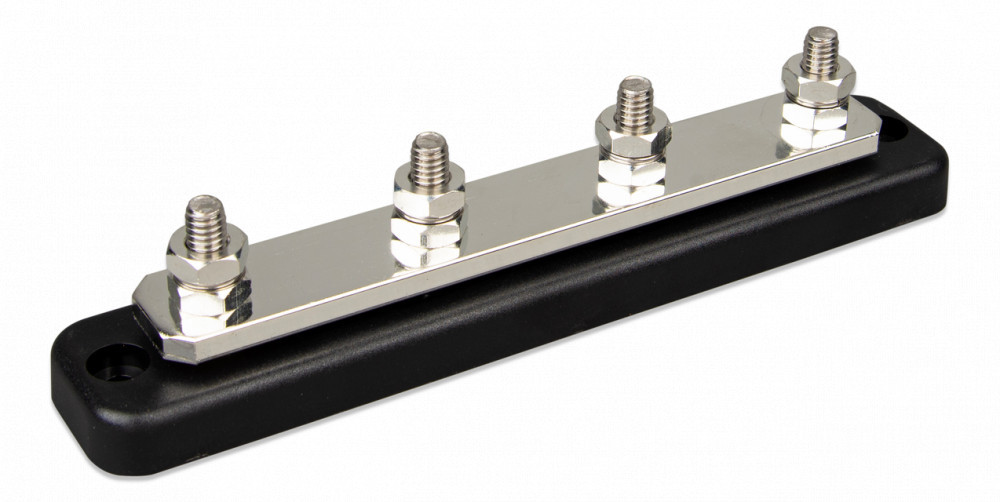
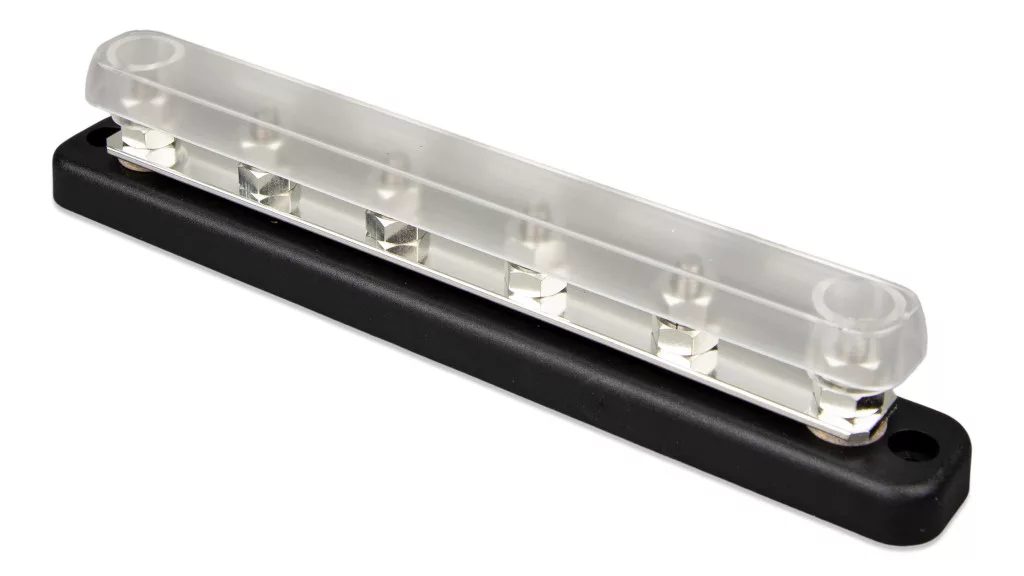
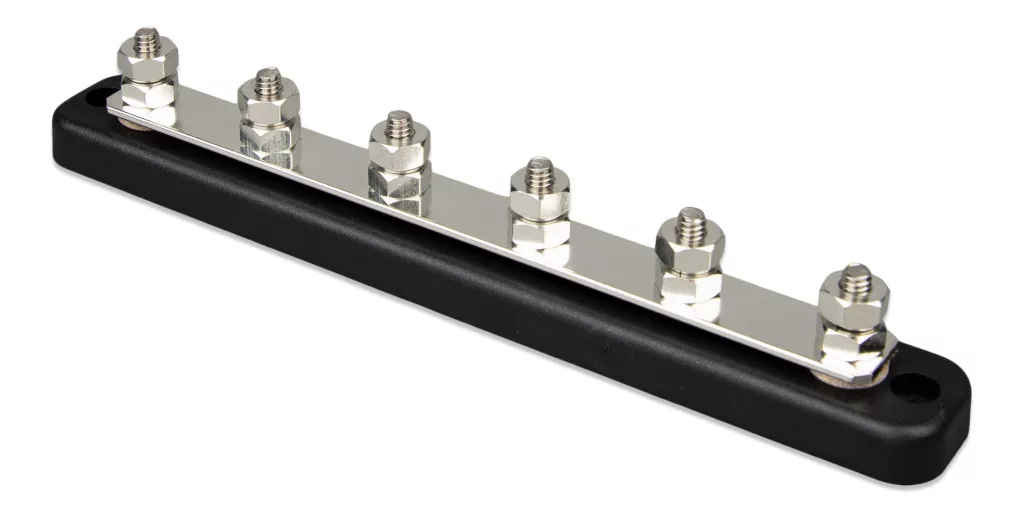
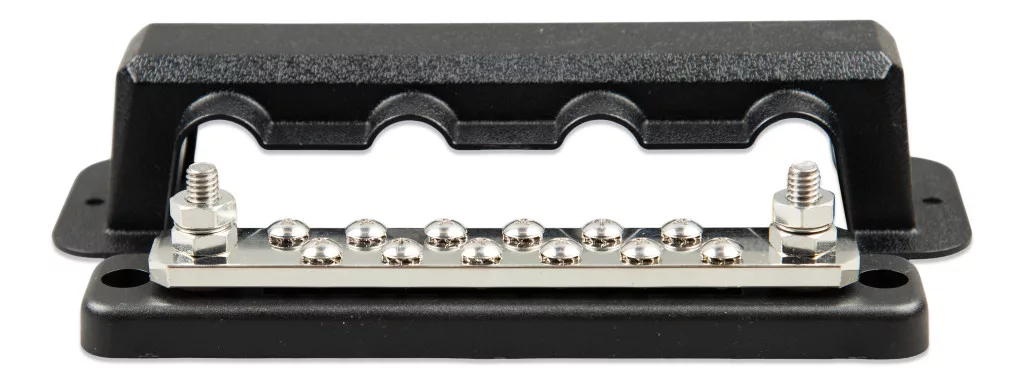
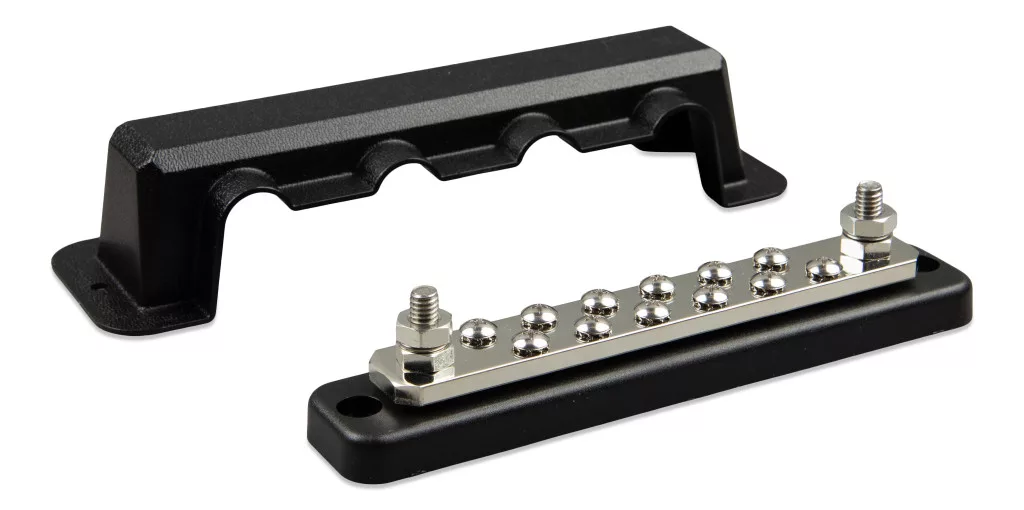
Robust Busbar with Cover, 250A Load Capacity
This 4-point busbar is specifically designed for high-current DC systems where safe and clear connections are needed. The 250A rated current allows you to reliably connect high-load consumers, batteries, chargers, or inverters at a single common point.
The product is an excellent choice for RVs, boats, solar systems, off-grid or hybrid power solutions, as well as industrial DC distributions. It helps organize wiring, reduces cable clutter, and provides clearly identifiable connection points.
Main Features and Benefits
- Maximum 250A rated current in DC systems
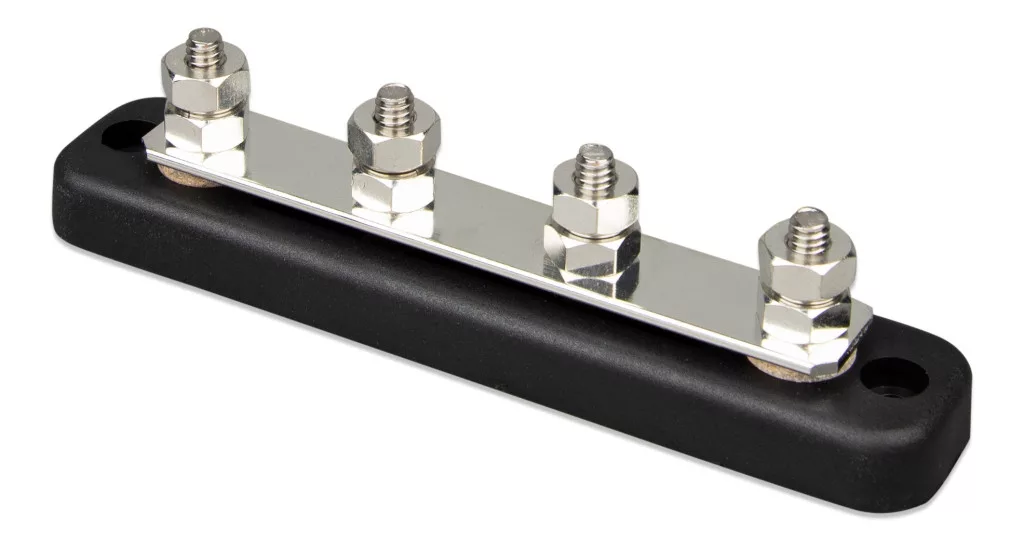
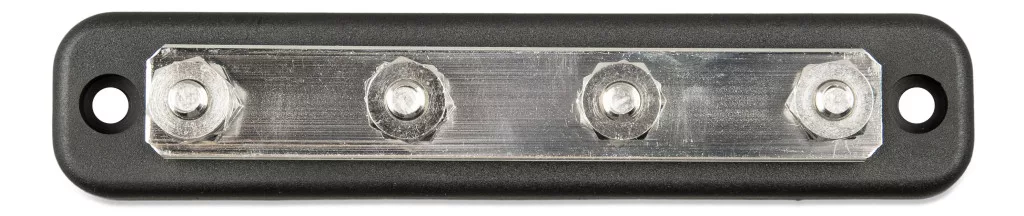
- 4 separate connection points for cables
- Strong, low-resistance busbar for minimal loss
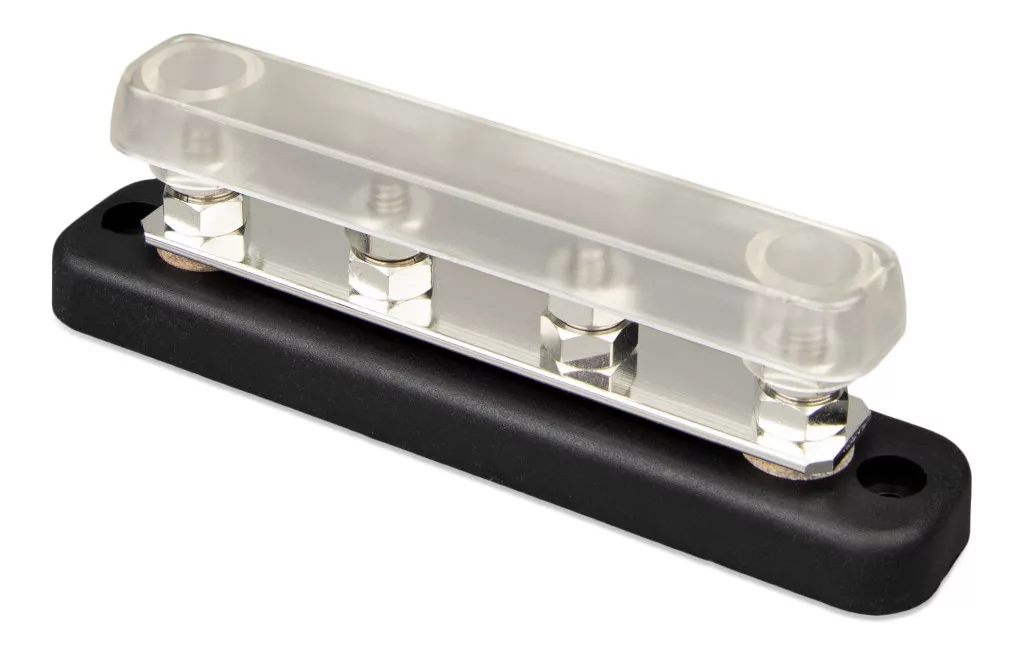
- Removable protective cover for increased touch protection and safety
- Compact yet robust design for tight installation spaces
- Clear cable management in solar and vehicle applications
Applications
The 4-point busbar makes it easy to connect multiple consumers or power sources to a common point. Ideal if you want to power multiple devices from a single battery or battery bank, or if you need to connect a DC fuse box, inverter, and charger to a single busbar.
Typical applications:
- 12V / 24V / 48V solar power systems
- RV, trailer, boat onboard networks
- Off-grid battery storage and inverters
- Vehicle and industrial DC distribution cabinets
Safety and Protection
The included cover is crucial for touch protection as it reduces the risk of accidental short circuits and prevents tools or other conductive objects from touching the connection points. The cover also helps keep the wiring organized in a transparent layout and remains accessible for maintenance or expansion.
The robust, low-resistance connection points provide a stable connection, and when used with properly sized terminals and cables, you get a reliably functioning power distribution in the long term. Properly tightened screws with the correct torque result in minimal contact resistance and heat generation.
Installation Tips
Installing the busbar is straightforward, but it is worth adhering to some basic considerations for safety and longevity:
- Selecting the right location: Choose a point where the busbar can be securely mounted, and the cables can be routed without bending or tension.
- Using the right cable cross-section: Use appropriately sized wires for the 250A limit, considering the cable length and system voltage.
- Terminals and bolting: Use crimp or press terminals for the cable ends, then tighten the screws according to the manufacturer's torque recommendations.
- Incorporating fuses: It is advisable to install appropriate fuses or circuit breakers in the branches connected to the busbar for overcurrent protection.
- Using the cover: After checking the connections, place the protective cover to ensure the system is touch-safe and operationally safe.
Why is a busbar useful in a DC system?
A well-designed busbar significantly simplifies the structure and clarity of a DC system. Instead of multiple cables going directly to the battery terminal, each branch connects to a common distribution point. This:
- results in neater, safer wiring,
- makes troubleshooting and maintenance easier,
- facilitates the later connection of new consumers or chargers,
- reduces the number of loose, overloaded, or poorly identifiable connection points.
Especially useful in solar systems, where stable and well-structured power distribution must be ensured between multiple charge controllers, inverters, DC consumers, and battery packs.
Summary
This high-current distribution solution is an ideal choice for any application where reliable, safe, and organized DC power distribution is important. The combination of 4 connection points, 250A load capacity, and a practical protective cover effectively supports the stable operation of modern solar, RV, boat, and industrial power supply systems.