Aerial optical cable for long-distance, reliable data transmission
This high-capacity, ADSS (All-Dielectric Self-Supporting) design aerial optical cable is specifically made for suspended installation, on the same pole system as electrical overhead lines or on its own pole line. It provides an ideal solution for building backbone networks, FTTH/FTTx networks, industrial facilities, camera systems, and corporate data connections where high bandwidth, stable signal transmission, and long lifespan are important.
Main technical features
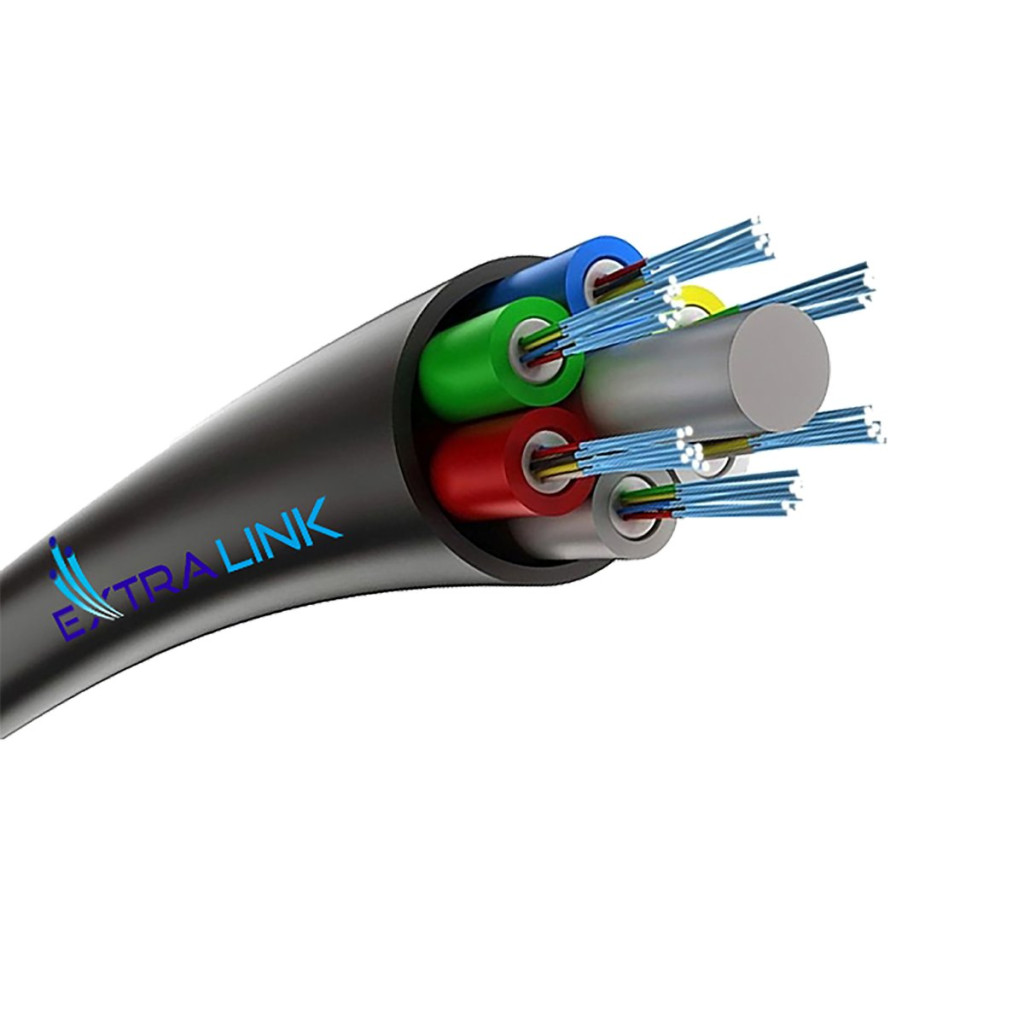
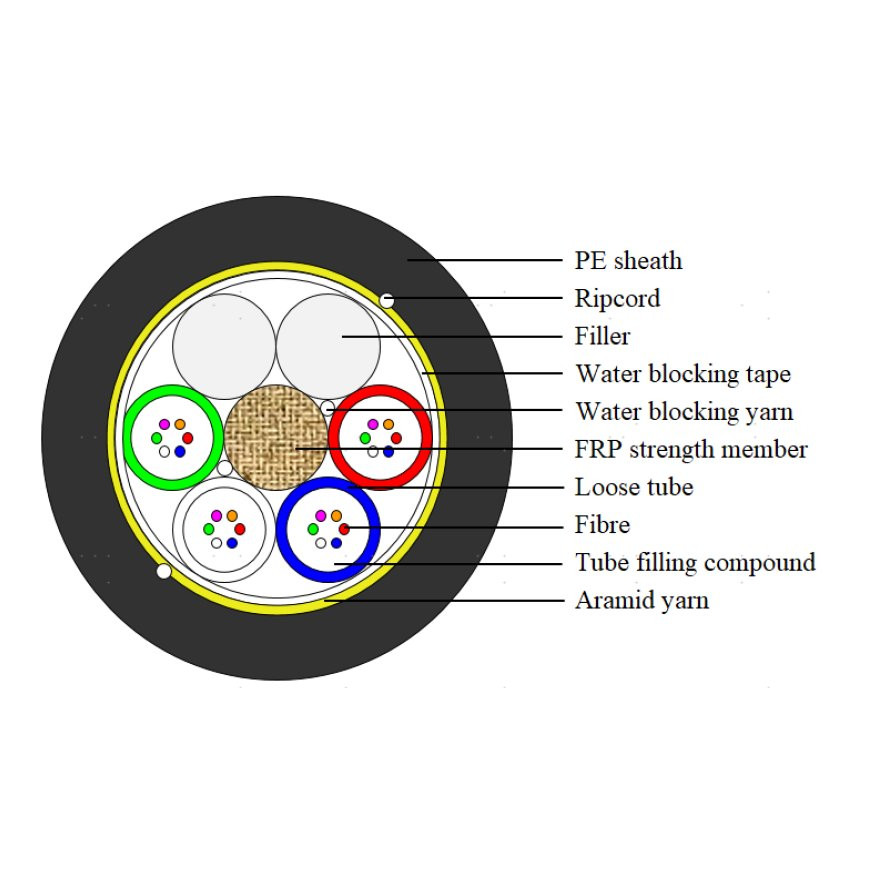
- 48 optical fibers, arranged in 6 loose tubes of 8 fibers each
- G.657A1 bend-tolerant optical fibers for easier installation
- 3 kN allowable tensile strength for safe, self-supporting suspension
- Approximately 10 mm outer diameter, compact and robust design
- ADSS, fully dielectric structure: no need for steel wire
- Excellent UV, moisture, and temperature resistance for outdoor use
- Low attenuation, high data transmission capacity
ADSS technology – self-supporting, safe design
The ADSS cable's fully dielectric construction means it contains no metal, allowing it to be safely installed near high-voltage overhead lines, and there is no need for a separate support cable. The 3 kN tensile strength and special reinforcing elements ensure that the cable remains stable over time, even under wind, ice, and its own weight.
G.657A1 optical fibers – bend-tolerant and stable performance
The G.657A1 type fibers used in the cable are modern, bend-tolerant designs that:
- reduce signal loss due to bending (micro and macro bending),
- facilitate installation in tight pathways, corners, and bends,
- are compatible with G.652D standard networks,
- meet the demands of high-speed internet and IP-based services.
48-fiber structure – flexible network building
The 48 optical fibers provide sufficient capacity for building multiple clients, multiple services, or redundant lines. The 6×8 fiber structure offers clear fiber management, making it easier to:
- mark and identify at splicing points,
- separate network segments (e.g., different clients or sites),
- expand and maintain in the future.
Benefits of aerial installation
Using aerial optical cable allows for quick, cost-effective network construction since it does not require excavation or existing duct systems. It is specifically recommended for:
- rural and suburban backbone networks,
- connecting residential areas, industrial parks, and sites,
- data connections for camera systems and security solutions,
- building telecommunications and internet service provider networks.
Weather-resistant, durable structure
The cable's sheath resists UV radiation, rain, snow, ice loads, and significant temperature fluctuations. As a result, you can expect a long service life and stable optical performance even in outdoor aerial installations. The appropriate mechanical parameters ensure that the cable withstands:
- wind gusts and swaying,
- thermal expansion and contraction,
- mechanical stress during installation and operation.
Areas of application
The network built from aerial optical cable is an ideal choice in areas where high bandwidth, reliable data transmission, and cost-effective construction are primary considerations:
- broadband internet networks (FTTH, FTTB, FTTx solutions),
- corporate and institutional gigabit connections,
- IP-based telephone and television services,
- data center interconnections (campus networks),
- smart city and IoT infrastructure.
Why choose this design?
This aerial optical cable offers an excellent compromise between high fiber capacity, high mechanical resistance, and compact size. The 48 fibers are sufficient to meet current demands while providing reserves for future expansions. The G.657A1 fibers, 3 kN tensile strength, and fully dielectric ADSS construction create a combination that offers a safe, scalable, and cost-effective solution for any professional optical network in the long term.