Fiber Optic Cables for Data Transmission and Network Construction
Our online store offers a wide range of aerial cables, ADSS optical cables, and microduct solutions, including G.652D and G.657A1 standard fibers. The selection includes types with small and large fiber counts and load capacities, with various sheath diameters, ensuring that suitable cables can be found for every segment from the backbone network to the drop section.
The products include Extralink and Fiberhome solutions, available in 12–144 fiber configurations, optimized for microducts, microchannels, and aerial suspension. Choose based on the desired tensile strength, diameter, fiber distribution, and application method.
- Aerial ADSS optical cables (XOTKtsdD, 3 kN load capacity, 9.8–10 mm diameter)
- Cables for microchannels and microducts (ZM-XOTKtsD, 5.4–7.9 mm diameter)
- Single Mode fibers, G.652D and G.657A1 standards, available in 12–144 fiber configurations
- Special high-capacity aerial cables (0.6–3 kN tensile strength)
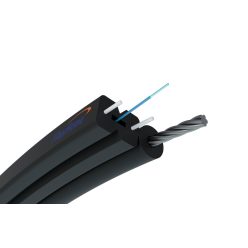
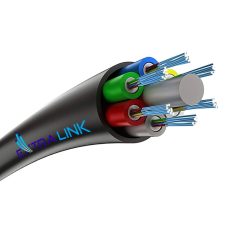
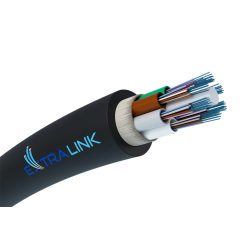
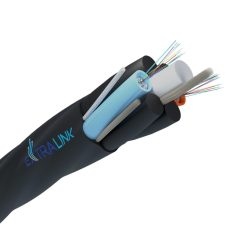
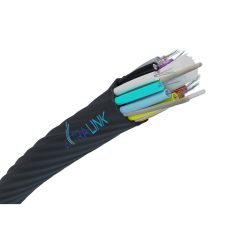
Optical cable for microtubes, Extralink ZM-XOTKtsD 144f, 144j (12x12j), G.652D type, 7.9 mm diameter
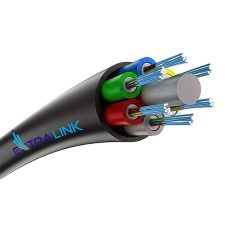

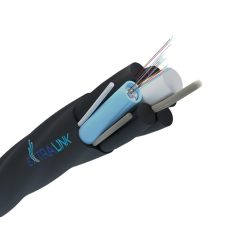
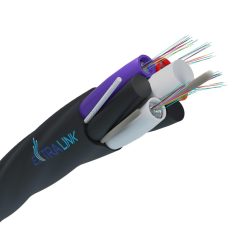
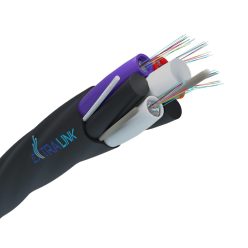
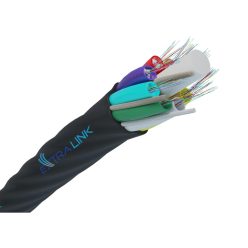
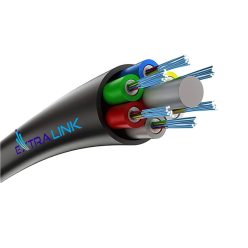
Applications of Fiber Optic Cables
The optical cables available in this category are primarily designed for external networks: for aerial installations (ADSS aerial cables, such as XOTKtsdD types) and for microduct and microtube systems (ZM-XOTKtsD series). They are ideal for the construction and expansion of high-bandwidth backbone networks, FTTH/FTTB segments, and enterprise and service provider optical networks.
What Technical Considerations Should Guide Your Choice?
When purchasing, it is important to consider the number of fibers, the standard (G.652D or G.657A1), the tensile strength, the outer sheath diameter, and the application method (aerial cable or microduct/microtube installation). The G.657A1 type is particularly advantageous for tight bending radius and complex routes, while the G.652D is widely used in classic long-distance backbone applications.
- Fiber Capacity: 12–144 fibers, single or multi-bundle design (e.g., 6x12J, 12x12J).
- Tensile Strength: typically 0.6–3 kN, which determines the span and load capacity of the aerial cable.
- Sheath Diameter: approximately 5.2–10 mm, which affects installability, compatibility, and necessary installation accessories.
- Application Environment: aerial installation, microchannel or microtube, urban, subscriber, or backbone network segment.
Characteristics of Aerial Cables (ADSS)
ADSS (All-Dielectric Self-Supporting) optical cables are self-supporting and fully dielectric, meaning they do not require a metallic support cable and can be safely used near electrical fields. The Extralink XOTKtsdD types, with a tensile strength of 3 kN and a diameter of 9.8–10 mm, for example, can be installed for longer spans, on outdoor pole lines, and near medium-voltage networks.
Microduct and Microtube Optical Cables
The ZM-XOTKtsD type cables are specifically designed for blowing into microchannels and microtubes, featuring a small outer diameter (5.4–7.9 mm) and lightweight construction. The 12–144 fiber configuration allows service providers to flexibly expand their networks, even at a later stage, utilizing the existing duct system.
Typical Use Cases
- Building service provider backbone networks and urban optical rings with high fiber capacity (72–144 fiber) cables.
- Aerial cabling on pole lines with ADSS solutions, where high tensile strength and self-supporting design are important.
- Microduct and microtube construction of FTTH/FTTB access networks with 12–48 fiber cables.
- Connecting corporate and industrial sites with highly reliable Single Mode optical backbone.